How often do cats need vaccines?
After the kitten series, which usually starts around eight weeks with boosters three to four weeks apart, core vaccines (such as those against feline panleukopenia, herpesvirus, and calicivirus, and rabies where required) are boostered at one year and then every one to three years depending on the vaccine, lifestyle, and local rules. Your vet sets the actual schedule. In MaoLife you can log each vaccine and set a reminder for the next booster.
How do I avoid missing my cat's next vaccine or booster?
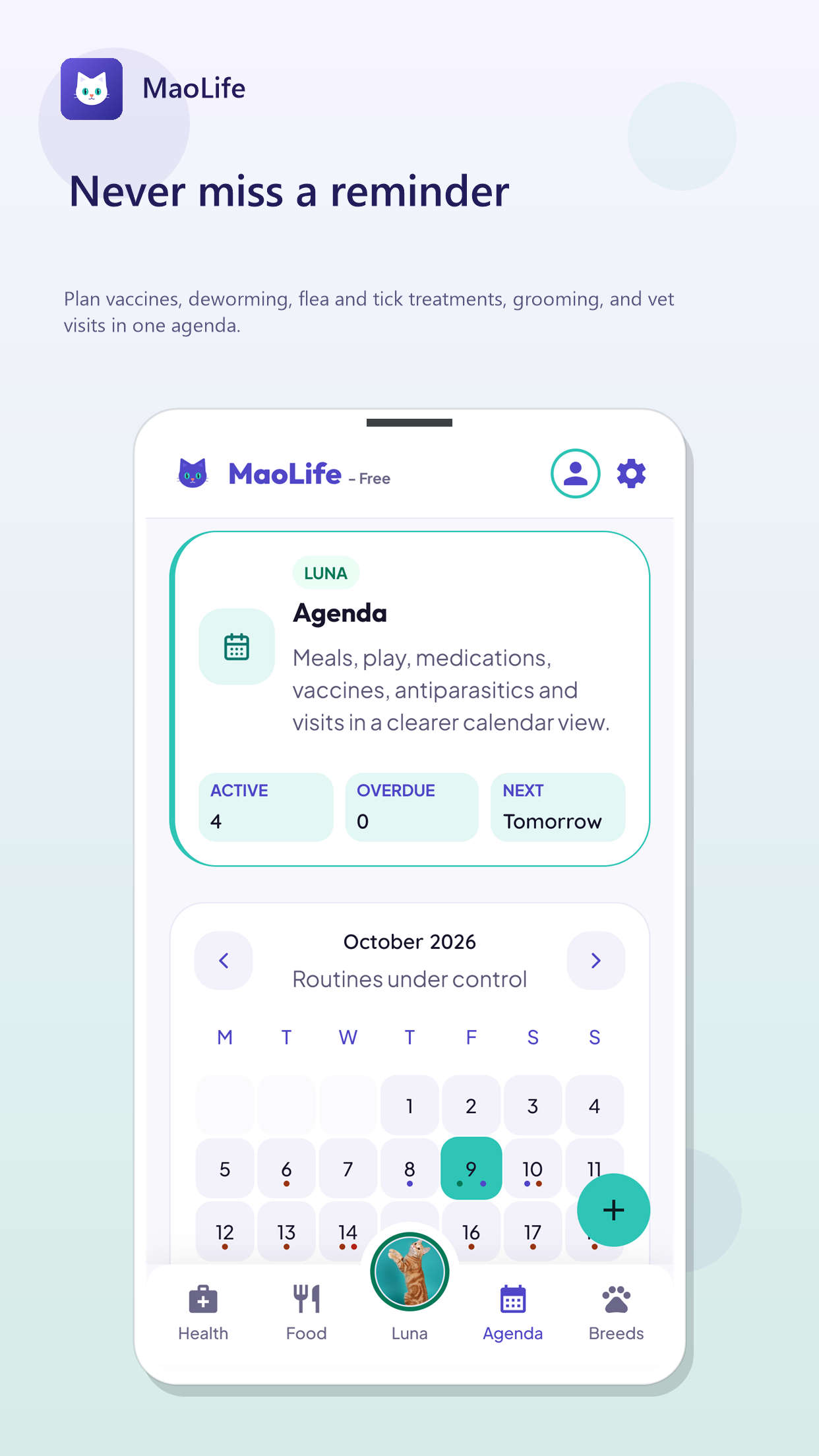
The most reliable way is to write down the date and interval your vet gives you right after each vaccination, since paper records get lost easily and that's a common reason boosters are missed. In MaoLife you log the vaccine in the health diary and create a reminder, even a recurring one, so the due date shows up in your agenda.
How often should I deworm my cat and how do I remember flea treatment?
Frequency and product depend on age, weight, lifestyle (indoor or outdoor), and your vet's advice: kittens are treated on a tighter schedule, adults at longer intervals. Writing down the date of the last treatment is the simplest way not to skip one. MaoLife has dedicated reminders for antiparasitics and deworming. Note that some dog flea products contain substances, like permethrin, that are dangerous to cats.
How do I keep a health diary for my cat?
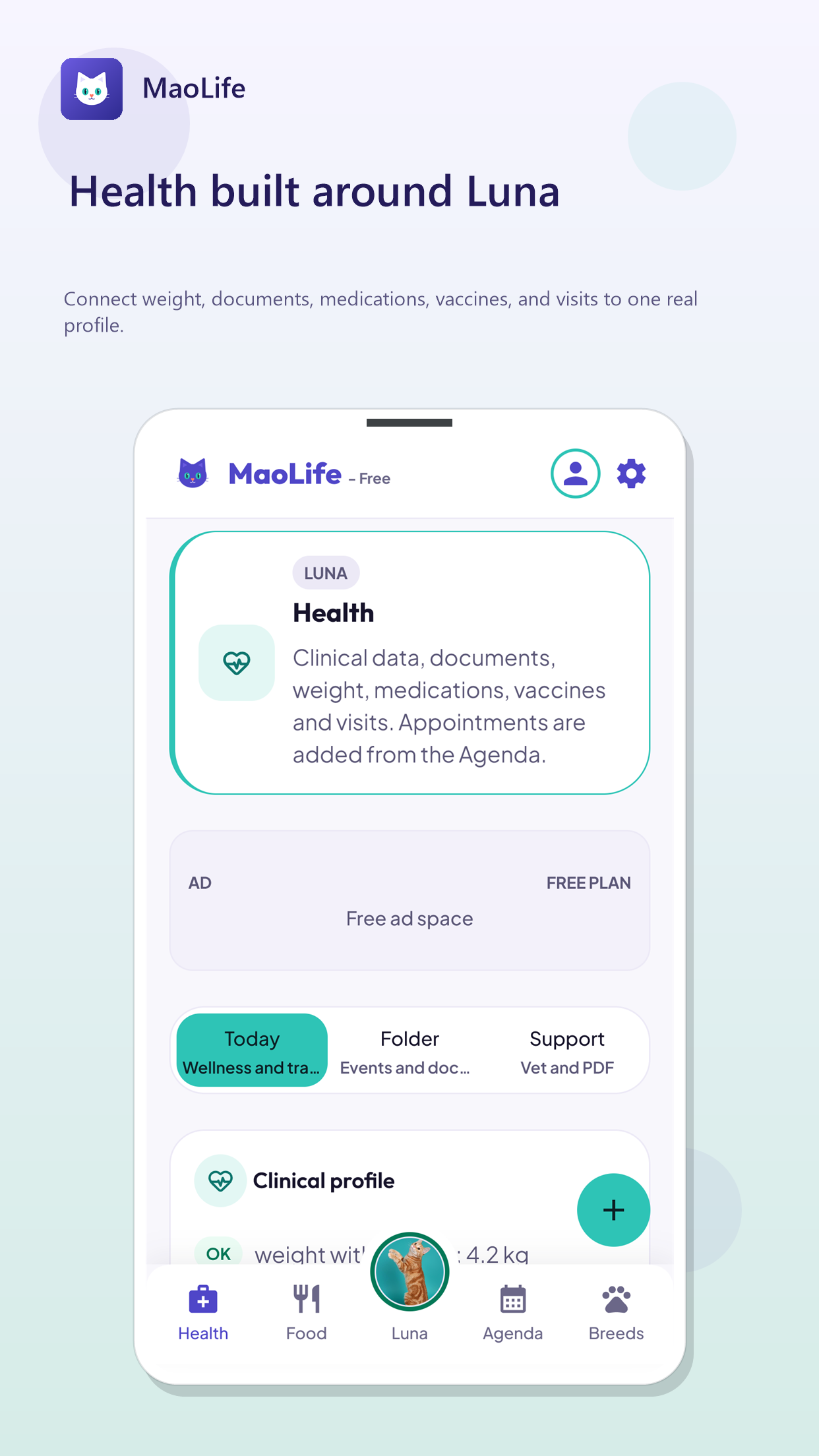
A good diary records visits, vaccines, treatments, weight, and daily observations in chronological order; a few seconds after each event is enough. It doesn't replace your vet's clinical record, but it completes it from the point of view of the person living with the cat. MaoLife lets you log meals, litter box, weight, medication, and visits in a single timeline.
How often should a cat see the vet for a checkup?
A healthy adult cat generally benefits from a yearly checkup, kittens are seen more often in the first months, and senior cats, from around eleven years, often every six months. This is a general guideline: your vet decides the right frequency. In MaoLife you can keep track of the last visit and plan the next one.
My cat is hiding more than usual: should I worry?
Yes, hiding more, changing habits, or withdrawing can be one of the first signs of discomfort, because cats tend to mask pain. If the change lasts more than a day or two or comes with other symptoms, contact your vet. MaoLife includes hydration and hiding check-ins to spot changes early, but they don't replace a visit.
How much should a cat eat per day?
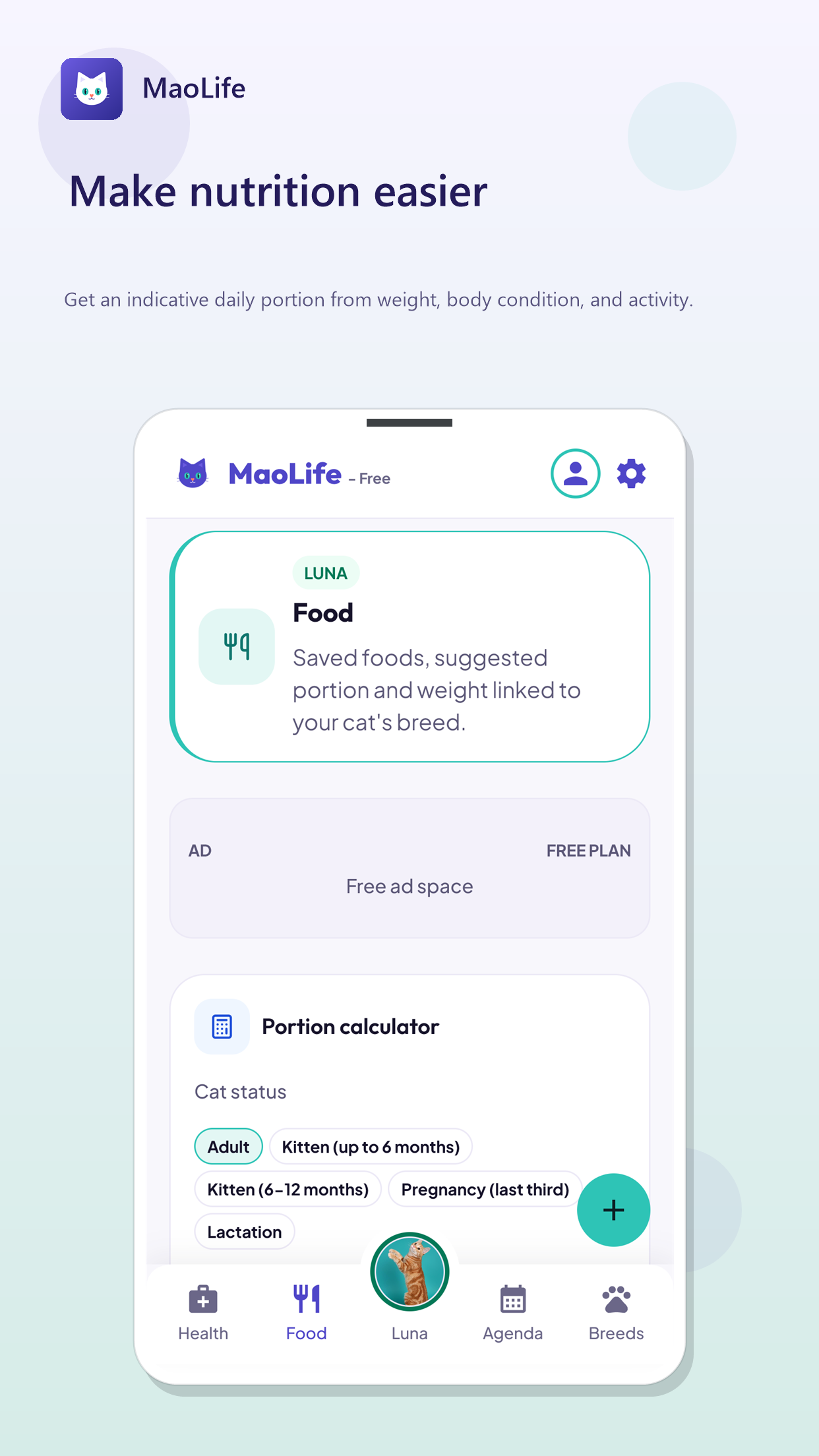
It depends on weight, age, body condition, activity, and the type of food (wet or dry), so there's no fixed rule: the label gives a starting point and your vet adjusts it for your cat. MaoLife calculates an indicative daily portion from weight, body condition, and activity, which you should always check against your vet's advice.
What is a healthy weight for a cat, and how can I tell if mine is overweight?
Ideal weight varies a lot by breed and build: an adult domestic cat is often between 3.5 and 5 kg, while a Maine Coon can weigh far more. More reliable than the number alone is the body condition score: you should be able to feel the ribs without seeing them, with a visible waist from above. MaoLife includes a body condition guide and a weight history to follow the trend over time.
How can I tell if my cat's litter box habits signal a problem?
Frequency, amount, and appearance of urine and stool are important indicators: going far more often, straining without producing urine, blood, or urinating outside the box shouldn't be put off, especially in male cats, because a urinary blockage is an emergency. MaoLife logs litter-box use and explains the trend in plain language, with the signs worth watching.
My cat hasn't eaten for a day: what should I do?
An adult cat refusing food for more than 24 hours should see a vet, because prolonged fasting can cause serious liver problems, especially in overweight cats; kittens and seniors need even closer attention. Noting when your cat last ate is useful for the vet. MaoLife lets you log meals and behavior day by day.
Which plants are toxic to cats?
Among the most dangerous are lilies (Lilium and Hemerocallis), even in tiny amounts of pollen or vase water, which can cause kidney failure; dieffenbachia, philodendron, pothos, oleander, and azalea are also problematic. If your cat chews a plant, don't wait for symptoms and contact your vet right away. MaoLife's SOS toolkit lets you check whether a plant is toxic to cats.
Which foods are dangerous for cats?
Chocolate, onion, garlic, grapes and raisins, alcohol, caffeine, and sweeteners like xylitol are toxic or potentially toxic to cats; cow's milk can also upset digestion because many adult cats are lactose intolerant. When in doubt, contact your vet. MaoLife's SOS toolkit helps you check plants, foods, and products.
Which household products are dangerous for cats?
Antifreeze (ethylene glycol), human medicines such as acetaminophen and ibuprofen, some essential oils (for example tea tree), concentrated cleaners, rodent bait, and dog flea products containing permethrin can be very dangerous to cats. If your cat has touched or swallowed one, call your vet or a poison helpline immediately. MaoLife includes an informational product check that never replaces professional advice.
Which cat breeds suit apartment living best?
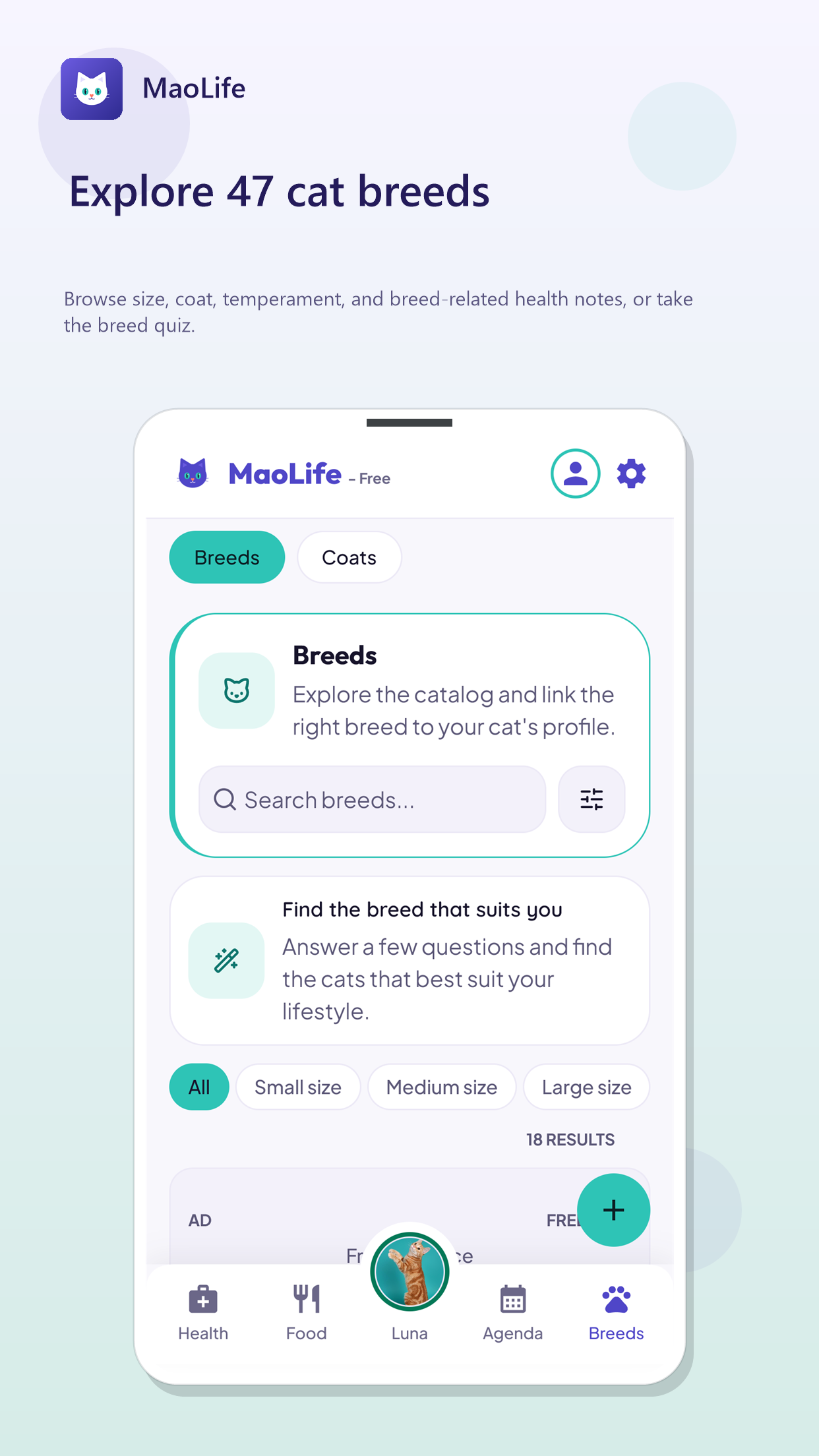
Many breeds adapt well to indoor life, such as the British Shorthair, Ragdoll, Persian, and Birman, which are calmer and need less space; very active breeds like the Bengal or Abyssinian need stimulation, play, and climbing. MaoLife offers 47 breed profiles and a short quiz to guide you based on your home.
Which cat breeds are good with children?
An individual cat's temperament matters more than breed, but Ragdolls, Birmans, Maine Coons, and British Shorthairs are often described as patient and sociable. Either way, children and cats should be introduced gradually and supervised. MaoLife's breed profiles list size, coat, and temperament.
Are there hypoallergenic cats?
No cat is truly hypoallergenic: the main allergen (Fel d 1) is produced by all cats, though some breeds, like the Siberian, produce lower levels in some individuals, and reactions vary from person to person. If you're allergic, spend time with the cat before adopting and talk to a doctor.
How do I recognize tabby, tortoiseshell, and calico coats?
Tabby cats have stripes, spots, or swirls; tortoiseshell mixes black and orange without white; calico adds white to black and orange. Tortoiseshell and calico cats are almost always female because the orange color gene sits on the X chromosome. MaoLife's breed section includes a guide to coat colors and patterns, including colorpoint.
Are some cat breeds more prone to certain diseases?
Some breeds have known predispositions: for example hypertrophic cardiomyopathy in Maine Coons and Ragdolls, polycystic kidney disease in Persians and related cats, and joint problems in Scottish Folds. A predisposition doesn't mean your cat will get sick, but it's worth discussing with your vet. MaoLife's breed profiles include breed-related health notes.
What documents do I need for my cat?
You'll typically need a vaccination record or passport, vaccination certificates, test results and medical records, and the microchip number; to travel within the European Union, a microchip and rabies vaccination are required under the destination country's rules. In MaoLife you keep vaccination records and medical documents with your cat's profile.
How can I organize my cat's vet documents in one place?
The most practical way is to tie everything to the cat's profile: records, test results, prescriptions, and invoices in chronological order, available on your phone. In MaoLife you can upload documents to the profile and, with the Pro plan, export a PDF report to bring to your vet.
What should I do if my cat goes missing?
Search the immediate area first, since cats often stay close to home, hiding under cars, in basements, or in nearby gardens; then alert neighbors, vets, and local shelters, check that your microchip is registered with your current contact details, and share a poster with a photo. MaoLife generates a lost-cat poster and a social post you can share in seconds.
Which signs mean I should see a vet right away?
Trouble breathing, straining in the litter box with no result, repeated vomiting, swelling, seizures, collapse, suspected ingestion of toxic substances, and refusing all food and water shouldn't be put off. MaoLife includes a simple urgent-signs guide with one-tap call to your vet, but it doesn't replace professional advice: in an emergency, contact a veterinarian immediately.
How can I share my cat's care with my family?
The ideal is one place where everyone sees meals, medication, and upcoming visits, to avoid double doses or missed ones. With Care Circle, included in the Ultimate plan, you share your cat's care with family members and sitters through revocable access.
What should I tell a cat sitter?
The essentials are meal times and amounts, any medication, litter-box habits, your vet's contact, and what to do in an emergency. With Care Circle in MaoLife you can give a sitter access only for as long as needed and revoke it when you're back.
Can I use MaoLife for free?
Yes: the Free plan includes one cat, 10 reminders, 5 documents per cat, and a 30-day history, with ads. Pro adds up to 3 cats, cloud backup and sync, a PDF report, and no ads; Ultimate adds unlimited cats and Care Circle. Subscriptions are managed in your store account.
Does MaoLife replace my vet?
No. MaoLife is an organizational and informational tool: it does not diagnose, prescribe, or replace your veterinarian. In an emergency, contact a veterinarian immediately.


 Link in preparation
 Link in preparation